


Why Do Two People Experience the Same Situation Differently?
Imagine you’ve been to a family gathering and afterwards you’re talking to someone else who was there about how it went.
How many times have you felt confused or even frustrated because their experience was completely different from yours? After all, it was the same event, with the same people, in the same room. So how can you come away with such different experiences? And what happens when you think back on that gathering a few weeks later? Has your experience of it changed again?
When we experience life, it can feel as though we’re simply seeing reality as it happens. We see, hear and feel what’s going on around us. We respond to other people and they respond to us.
It’s easy to assume that everyone else is taking in much the same information. But then someone mentions something you completely missed. Or they remember a conversation differently. Perhaps something that seemed important to you barely registered with them.
The reality is that none of us experiences an event like a camera, objectively recording everything that happens.
We Don’t Take In Everything Around Us
At any given moment, our senses are exposed to a vast amount of information.
Recent research by Zheng and Meister highlights just how extraordinary the difference is. They estimate that our sensory systems gather information at roughly one billion bits per second, while the information throughput associated with human perception, cognition and behaviour is only around 10 bits per second.
What this difference demonstrates is the enormous gap between the information available through our sensory systems and the much smaller amount ultimately used to guide our thoughts and behaviour. Our brains are constantly filtering, reducing and prioritising.
Your Brain Has to Decide What Matters
Our brains evolved, first and foremost, to help us navigate the world and survive within it.
They weren’t designed to create a perfect recording of everything happening around us. With so much information available, our brain and nervous system have to prioritise what receives our attention.
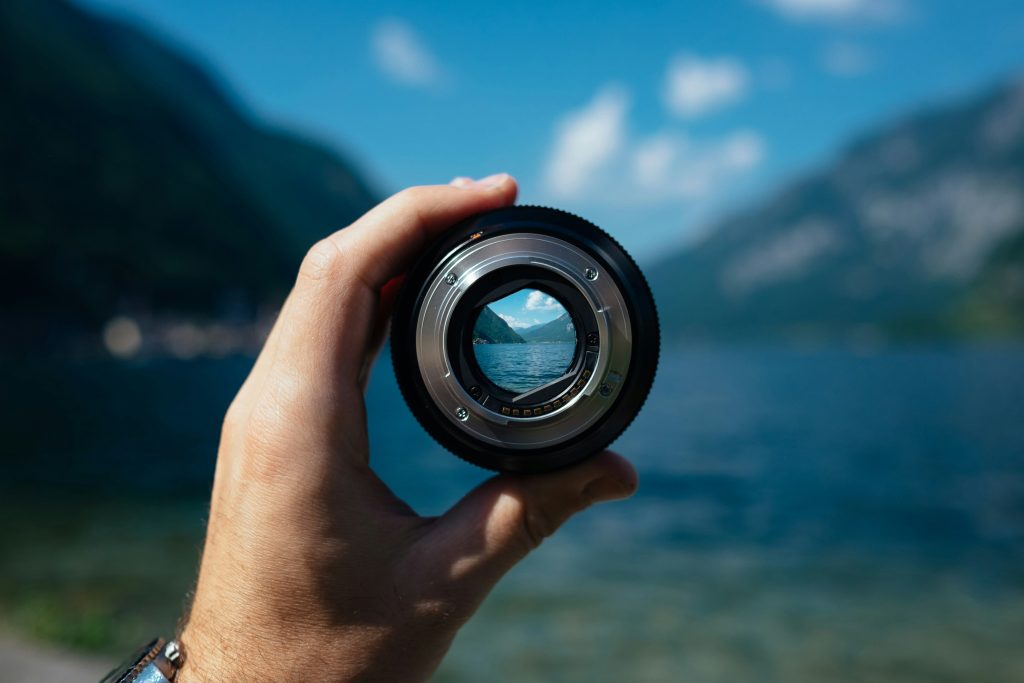
You could think of attention as an internal lens. What captures our attention can be influenced by our relationships, previous experiences, expectations, what is important to us, our emotional state and what is happening in our lives at that particular moment.
And sometimes our attention isn’t focused on the outside world at all. We can become absorbed in our own thoughts, memories or worries and miss things happening around us.
One of the best-known demonstrations of this is an experiment conducted by psychologists Daniel Simons and Christopher Chabris.
Participants watched people passing basketballs and were asked to count the passes made by one team. While they were concentrating on the task, a person dressed as a gorilla walked directly through the scene. Around half didn’t notice the gorilla. They were looking at the screen. But their attention was somewhere else.
This phenomenon is known as inattentional blindness. Zheng and Meister also discuss inattentional blindness when explaining the limits on what we perceive and retain outside our focused attention.
We can be looking directly at something without consciously noticing it.
So think again about that family gathering.
You’re not consciously noticing every facial expression, every conversation, every change in someone’s tone of voice, every gesture or every interaction.
You’re noticing some things. And the person sitting next to you may be noticing something completely different.
What Makes You Notice One Thing and Not Another?
One part of the brain involved in this process is the reticular activating system, or RAS. It is involved in regulating wakefulness, alertness and attention and is part of the wider systems that help regulate what receives our attention.
What becomes important to us can also be influenced by our goals, expectations, previous experiences, emotional significance and current concerns.
You’ve probably experienced something similar when thinking about buying a particular car. Suddenly, you seem to see that model everywhere. There probably aren’t suddenly more of them on the road. The car has simply become relevant to you, so you’re more likely to notice it. And relevance isn’t only about cars.
It can apply to the things we expect from other people, the things we’re worried about, the things that matter to us and the experiences we’ve had before.
Your Past Experiences Can Shape What You Notice
We don’t experience each situation in isolation. What has happened before can influence what we expect, what we notice and how we respond. This can be particularly noticeable with family and close relationships, where there may be years of shared experiences and emotions.
Two siblings can walk into the same room carrying very different experiences of their family. One may expect to feel welcomed and included. Another may remember occasions when they felt overlooked or criticised.
This isn’t about one person being right and the other being wrong. Their previous experiences can influence what captures their attention and the significance they give it.
One person may leave remembering the laughter, the conversations and how good it was to have everyone together. Another may leave thinking about one comment made across the table.
What We Notice Influences the Meaning We Give It
What we notice is only part of the story. We also give meaning to what we’ve noticed. Imagine you’re excited about starting a new job. At the family gathering, nobody asks you about it.
You notice: “Nobody asked me about my new job.”
But that observation might become: “They’re not interested in me.”
The first describes what you noticed. The second is the meaning you’ve given to it. That meaning can affect how you feel and how you respond. Perhaps you become quieter, withdraw from the conversation or leave feeling hurt. It can also influence what happens the next time you are together.
If you arrive at the next family gathering already expecting people not to be interested in you, that expectation may affect what you notice. You might pick up on the moments that seem to confirm it, while other moments barely register.
What we notice can influence the meaning we give something. That meaning can shape what we expect, and those expectations can influence what we notice the next time.
Are Our Memories as Reliable as They Feel?
There is another layer to how differently we can experience the same event: memory.
It can feel as though remembering something is like pressing play on a recording — retrieving what happened and watching it again. But memory is more dynamic than that.
Research into a process known as memory reconsolidation has explored what happens when an established memory is retrieved. Under certain conditions, retrieving a memory can make it susceptible to modification or updating before it is stabilised again.
So think back to that family gathering. You may have left with one experience of what happened. A week later, you talk about it with someone else who remembers something you hadn’t noticed, gives you another perspective or provides information you didn’t have at the time.
You haven’t changed what happened. But the way you understand and remember what happened may not remain exactly the same. Our memories help us make sense of our experiences, but they aren’t simply perfect recordings of them.

What Happens When We Question Our Interpretation?
Every interaction involves more than one person going through their own version of these processes. We are each noticing, filtering and interpreting what is happening from our own perspective.
Sometimes we can hold onto an interpretation of an event or conversation long after it happened. We may replay it, reinforce the meaning we’ve given it and find ourselves caught in an unhelpful loop.
We can’t go back and change what happened. But sometimes we can become curious about the story we’ve built around what happened.
It can be useful to ask:
- What did I actually observe?
- What did I make it mean?
- What else might have been happening?
- What might I have missed?
The aim isn’t to tell yourself that your experience was wrong. It’s about recognising the difference between what happened, what you noticed and what you made it mean. Sometimes, seeing that distinction can give us another way of looking at what happened and another choice about how we respond now.
What Might Change If You Saw Things Differently?
We can’t change what has already happened, but we can become more aware of how our experiences may still influence what we notice, what we believe and how we respond today.
Sometimes patterns that once made sense can begin to hold us back from what we want now. Becoming aware of them gives us the opportunity to question what is still helping, choose what we want instead and begin to respond differently.
Change can start with noticing something you hadn’t noticed before, seeing another possibility and choosing what you want to do next.
If you’re ready for something to change in how you think, feel or respond, you can start with a Discovery Call.